
How you organise and store your clothes ultimately depends on how much space you have. We all dream of a walk-in closet with a special shelf just for bags and endless rows for sorting jumpers by colour. In reality, most of us have a wardrobe and a chest of drawers, and every inch of it is used. So here are some tips to make the most of the space you have.
Deciding How to Organise Your Clothes
If your storage is limited, separating winter and summer clothes is a good option. I live in in England so I keep spring and autumn clothes in my closet all year round. In April and November I swap heavy winter knits and jackets for lightweight alternatives. I don’t live near the beach so I keep summer holiday clothes (bikinis, beach dresses etc) in a box under my bed.

Most people organise their other items by category: t-shirts / sweaters / leggings / etc. But there are alternatives. We all have 3 or 4 items of clothing that are our ‘Go-To’ items; I store all these together in the bottom drawer for my dresser. Another option is to separate frequently worn from regularly worn clothes / Smart clothes from Casual. What ever system you choose, be sure that your storage system compliments your organisational plan. If your plan is over complicated and you don’t have enough storage space you may run into trouble.
A Professional De-Clutterer & Home Organiser can help you decide what clothes storage plan will work best for your space.
Deciding How To Store Your Clothes
There is a terrific selection of closet organisation gadgets that will help you make the most of your space. A search on Amazon will reveal a huge selection, but I suggest you price shop as some of them are very overpriced. Be sure to measure your shelves and drawers before you choose something, sizes can vary dramatically.
My long term favorites are Connector Hooks and more frequently I have started using Soft Organiser Boxes which are perfect for a variety of clothing options.

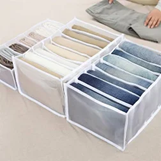
Most people try to hang up as much as they can as they believe that hanging is best for clothes; this is not necessarily the case. It’s better to fold items in tissue paper than squash them into an over-crowded closet. So here is a guide to help you decide whether to choose hanging & folding.
Hanging Tips

Golden Rule: Avoid squashing your clothes into the closet; if your closet is overcrowded opt for folding instead. See below for tips on Folding your clothes.
- Always opt for fabric, felt or wood hangers. Avoid metal hangers, they cause sharp creases and potentially rust stains.
- Make sure your garments are evenly spaced in the closet.
- Make sure the hanger fits your clothes. If they are too big, they will stretch, too small and your garment won’t have the enough support.
- When hung, garments should drape naturally rather than be bunched up together. This prevents creasing and allows for proper ventilation.
- Use space saving hangers for hanging belts and ties.
- Avoid putting more than one garment on a single hanger.
- Shirts & Polos: Close buttons & zippers to help garments retain their shape.
- Trousers: Remove belts & fold along the natural crease. Avoid clamps, they just add creases.
- Silky Garments: Use padded hangers for slippery silks and satins, as well as delicate fabrics that crush easily, such as velvet, raw silk, chiffon, and taffeta. Most silk, and other delicate items have satin straps inside the garment designed to support the garment when it’s on a hanger. These inner straps are especially important for thin strappy or strapless garments, as they prevent the fabric stretching.
Folding Tips
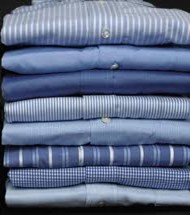
Golden Rule: Don’t pile folded clothes too high, (especially t-shirts and sweaters) the weight will set wrinkles into the items at the bottom of the pile. If your storage area needs higher piles seperate with card and tissue to preserve the garments shape.
- Begin with a flat and wrinkly free garment.
- Remember what the garment looks like folded is less important than what it looks like when you unfold it.
- For extremely delicate or precious items use tissue paper. This reduces strain on the fabric at the location of the fold.
- Folding & Storing Woollens: If you are putting woolen items away for a month or more, store then in airtight bags or containers. First empty all pockets, remove any belts or other accessories and fasten any buttons or zips. Knits and Weaves require different methods of storing because of the nature of the yarn.
- Wool Knits: A Woollen Knit is made from yarn that is interloped to create a fabric. Kitted garments should be folded, without pushing creases into the fabric and stored in drawers. Lightly knitted garments can be placed on top of heavy knits but always separate them with a layer of tissue paper. This will reduce wrinkles (and has the added bonus of looking nice).
- Wool Weaves: A Woollen Weave is made from yarn that is interlaced to create a fabric. Woven Wool Garments should be hung on shaped or padded silk coat hangers.
Happy Organising – Give us a call if you Have any questions

 Clutter Free & Organised